How produce outbreaks happen: Food safety & cold chain rules shippers need to know
From sanitation practices to FSMA requirements, transportation partners help reduce food safety risks
Outbreaks like Cyclospora highlight the importance of following safe food shipping standards. Total Quality Logistics (TQL) helps shippers reduce food safety risks and respond quickly when issues occur through strict carrier requirements for food grade trailer sanitation, precooling, shipment visibility, temperature monitoring for temperature-sensitive freight, and compliance with FSMA requirements.By Shannon Russell
When multistate foodborne illness investigations linked to contaminated produce make headlines, food safety throughout the supply chain becomes more important than ever.
Cyclospora is a microscopic parasite that can contaminate food and water. The Food & Drug Administration says the 2026 outbreak was linked to shredded iceberg lettuce.
Fresh foods require extra attention because many are eaten raw and have limited shelf lives. Careful handling and consistent temperatures help protect product quality and reduce food safety risks.
While contamination rarely starts during transportation, logistics providers like TQL can help reduce risks through temperature-controlled practices, strict trailer cleanliness and compliance with Food Safety Modernization Act (FSMA) requirements.
Related: Fresh solutions: TQL has your produce shipments covered
How do carriers prevent produce contamination before a truck leaves the dock?
Carriers help reduce the risk of produce contamination by ensuring trailers are clean, equipment is prepared and temperature requirements are met.
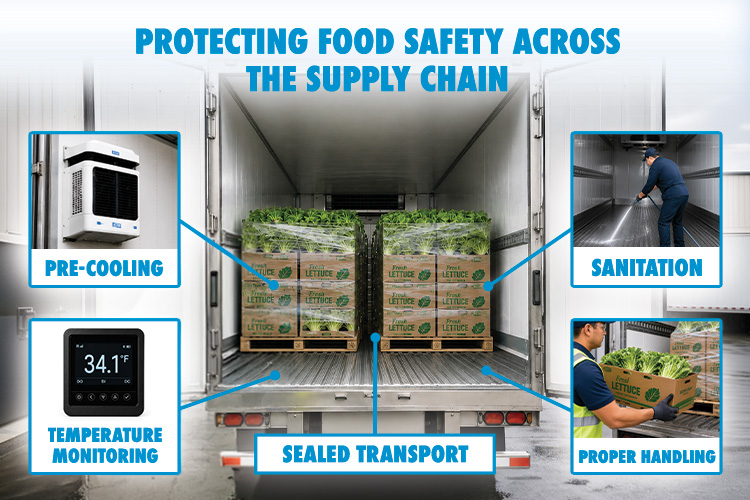
Before loading, carriers should make sure the equipment is ready for the shipment and won't compromise product integrity. Sanitary transportation requirements help reduce food safety risks during transit under FSMA. The regulations address areas such as equipment cleanliness, temperature management and communication between supply chain partners.
Every trailer should arrive at the shipper clean and free of debris, odors, moisture, pests or residue from previous shipments that could create cross-contamination concerns.
For temperature-controlled shipments, preparation also includes precooling the trailer before loading. Fresh produce and refrigerated food products are often loaded at a specific temperature and need a trailer environment that matches those requirements.
Loading refrigerated products into a warm trailer can create temperature fluctuations that impact freshness, quality and shelf life before a shipment even leaves the dock.
Carriers should also verify that refrigeration equipment is functioning properly and that trailer components such as air chutes are in good condition to support consistent airflow throughout transit.
Related: TQL cold chain management delivers customer solutions
Why is real-time tracking critical for perishable products?
Real-time tracking helps protect perishable products by allowing shippers to monitor shipments and respond quickly when problems arise.
Maintaining the right temperature throughout transportation is essential for many food shipments. Refrigerated transportation helps keep food fresh and maintain quality, but even small temperature changes can shorten shelf life and, in some cases, make food unsafe.
TQL provides different tools for shipment visibility and temperature monitoring:
- TQL TRAX: A no-cost customer portal that gives shippers a centralized view of freight activity and real-time visibility into select shipments. Customers have 24/7/365 access to tracking, status updates, documents and other shipment information.
- Covert tracking devices: For high-value and temperature-sensitive freight, these devices provide location visibility and temperature monitoring, helping customers protect shipments and respond quickly when issues arise.
How does TQL support safe food transportation?
TQL's roots in produce go back to the company's founding.
Before starting TQL in 1997, the company’s founder worked as a produce buyer and regularly relied on freight brokers to move shipments. Frustrated by inconsistent service and limited accountability, he wanted to create a logistics company built around reliability, communication and problem-solving.
That foundation and expertise continue to influence how TQL serves food shippers today. In 2025, TQL moved more than 137,000 produce shipments and earned the highest possible Produce Blue Book rating of 50,000 XXXX AA.
TQL invests in specialized training for its sales team members, or Logistics Account Executives. They complete 15 weeks of account management and logistics training before becoming eligible for produce certification. The certification program includes eight modules developed by in-house experts with a combined 70 years of produce experience.
That knowledge helps TQL work closely with shippers and carriers to communicate handling requirements, maintain shipment visibility and address issues during transportation.
More: Can a 3PL give your supply chain a competitive advantage?
How does TQL manage distressed loads and produce safety claims?
TQL's Distressed Loads Assistance team works with customers to identify solutions when food shipments are affected by delays, temperature issues, rejections or other unexpected events.
Even with careful planning, these issues can happen. Depending on the situation, products may be restacked, repacked, redirected to a new buyer or sent to a salvage outlet when appropriate. When a produce shipment is rejected, USDA inspections are ordered to determine the extent of damage and help guide next steps.
TQL's Claims Management Team also works with carriers, shippers and insurance providers to help facilitate claims resolution. The team adheres to PACA Good Delivery Guidelines when evaluating produce claims and suitable shipping conditions.
For food products that remain safe for consumption but can no longer move through traditional sales channels, TQL has a program called Moves That Matter to coordinate donations. The program covers transportation costs to help connect donated goods with food banks and nonprofits serving people in need.
How does communication help keep food moving safely?
Clear communication helps shippers, carriers and logistics providers act on food safety requirements before problems affect a shipment.
Sharing temperature requirements, handling expectations and sanitation procedures helps everyone understand what a shipment requires and what to do when conditions change.
Security measures can provide another layer of accountability. Trailer seals help supply chain partners identify potential security concerns before a shipment is unloaded. When applied at the point of origin, a seal should remain intact until the shipment reaches its destination and is opened by an authorized receiver.
When an issue arises, timely communication helps supply chain partners determine the next steps for the shipment.
Need support managing food shipments? Reach out to your dedicated Logistics Account Executive or call 800.580.3101 to learn how our logistics experts can navigate your transportation needs.