Why intermodal matters: Four shipping strategies that strengthen your supply chain
How evolving networks, stronger drayage and smarter tech are reshaping freight decisionsBy Shannon Russell
Key points:
- Intermodal shipping stabilizes costs, adds capacity and improves efficiency in long-haul freight.
- Drayage, rail and trucking work together as a true door to door system supported by better service and technology.
- Intermodal reduces emissions while maintaining strong performance.
What was once viewed as a specialized option is now a strategic choice for shippers balancing cost pressure, capacity swings and rising service expectations.
Today’s intermodal shipping isn’t just rail paired with trucking. It’s a data-informed, end-to-end solution supported by drayage, technology and a rail network that spans more than 140,000 miles across North America.
As long haul shipping becomes more complex, intermodal has become one of the most effective ways to keep goods moving efficiently and predictably.
Here are four things to know about why intermodal matters now.
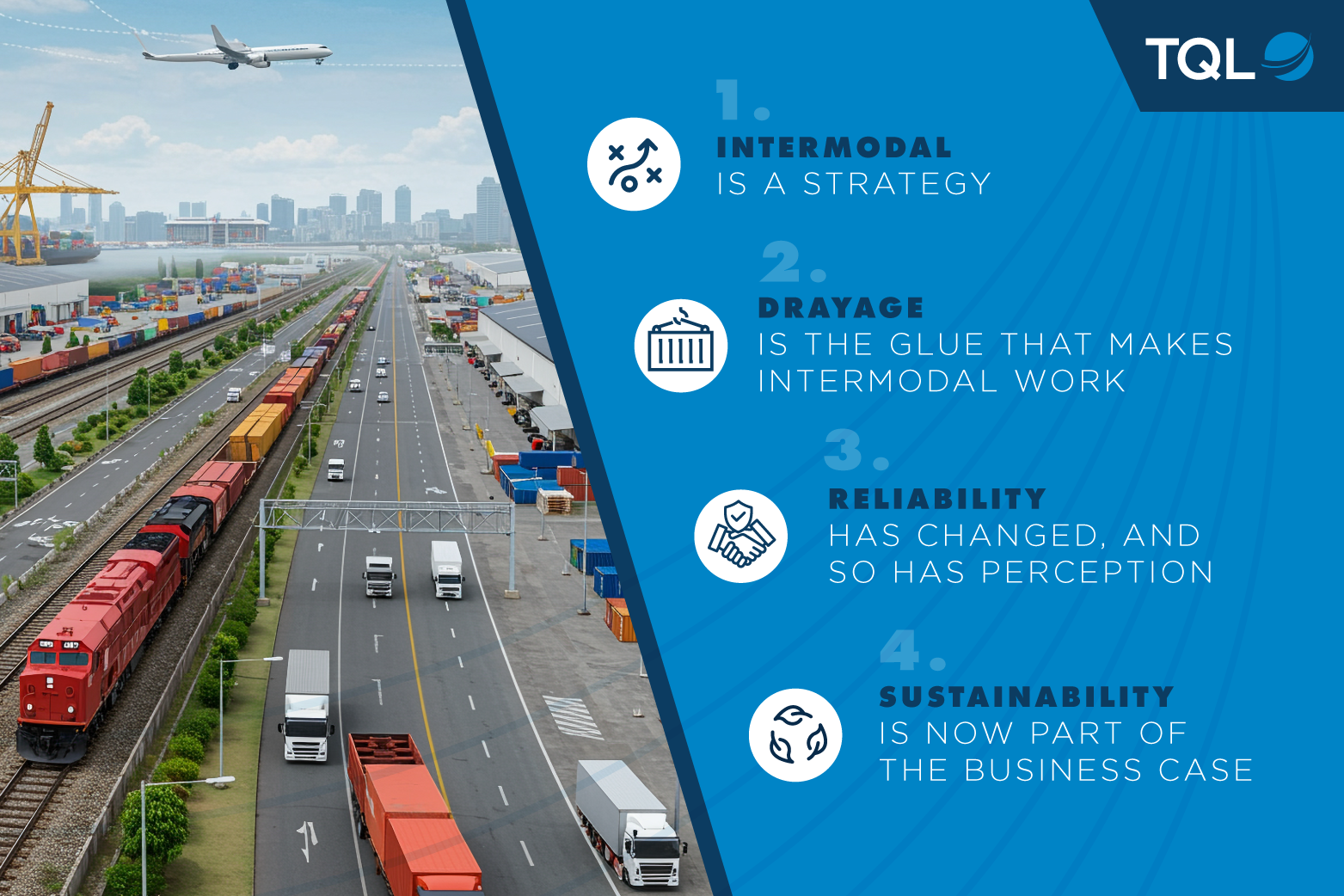
1. Intermodal is a strategy
Shippers don’t choose intermodal to replace truckload. Instead, it’s part of a broader logistics strategy, informed by freight analytics that help determine the right balance of cost, speed, reliability and emissions.
When full truckload capacity tightens and rates fluctuate, intermodal often becomes a more appealing option for long-haul freight that doesn’t need to move quickly.
It provides stability in pricing, capacity in tighter markets and efficiency as sustainability goals rise.
For freight that does not need the fastest transit, intermodal provides a predictable, strategic alternative that strengthens the overall supply chain.
Learn more: TQL supports intermodal with real-time visibility, emissions insights and nationwide capacity.
2. Drayage is the glue that makes intermodal work
Intermodal is most powerful in the long haul middle mile, but drayage makes the entire system work.
Drayage carriers connect shippers to rail ramps and ensure freight moves smoothly between modes, enabling intermodal to function as a true door-to-door system across rail, truck and terminal networks. Often supported by a single point of contact, this structure simplifies coordination and keeps freight moving.
As distribution networks expand and e commerce grows, this hybrid model of drayage, rail and trucking has become a natural fit for shippers that need reach and reliability without sacrificing control.
3. Reliability has changed, and so has perception
Intermodal once carried a reputation for being slow or unpredictable. That perception no longer tells the full story.
Railroads have improved their networks and terminals, leading to smoother and more consistent service. At the same time, logistics providers have added better tools, such as pricing insights, lane fit guidance, real time tracking and emissions visibility.
Together, those improvements give shippers more visibility and confidence in when to use intermodal.
While intermodal is still not as fast as a truck running nonstop, it is far more consistent than many shippers expect. For long haul freight that does not require next day delivery, it’s often one of the most reliable options available.
4. Sustainability is now part of the business case
Rail has always been one of the most fuel efficient ways to move freight. What’s changed is how much that matters.
See how: TQL helps shippers by turning sustainability insight into supply chain impact
Shippers are increasingly tracking emissions at the shipment level and factoring Scope 3 targets into transportation decisions. Many now use this data to evaluate when intermodal makes sense alongside cost and service.
Intermodal provides a practical way to reduce emissions without redesigning the network or giving up service reliability.
In most cases, sustainability isn’t the main driver for moving freight to intermodal. But once shippers adopt it, emissions reduction becomes a reinforcing benefit that adds to its long-term value in the network.
See where intermodal fits into your long-haul network. TQL helps identify the right lanes and optimize cost, capacity and service. Contact your Logistics Account Executive today, call 800.580.3101, or email Intermodal@tql.com.