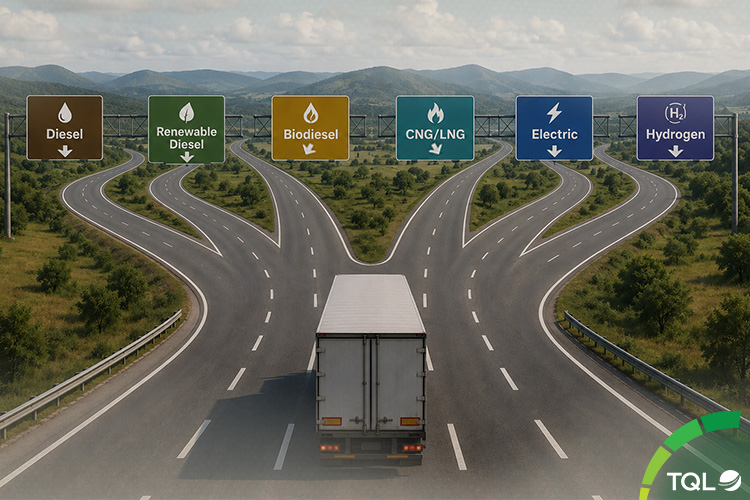
What’s the best alternative fuel for trucking? A shipper's guide to sustainable freight
Understanding the pros, cons and real-world fit of today's trucking fuel optionsBy Shannon Russell
Everyone wants cleaner freight. The hard question is what comes next: what’s the best alternative fuel for trucking?
Transportation remains one of the largest sources of supply chain emissions, and alternative fuels are now part of many sustainable freight transportation strategies.
But there isn’t a single answer. Performance, infrastructure and availability all vary depending on region and network.
No single fuel works across every lane or operation, so what fits a regional fleet may not translate to a national network. The decision is about understanding where each option works best.
More: Turn sustainability insight into supply chain impact
Where alternative fuels actually fit
As freight networks evolve, shippers have more fuel options than ever. The challenge isn’t options, but fit. Every option carries tradeoffs that shape how it performs in real operations.
These differences come down less to fuel performance itself and more to infrastructure requirements, equipment needs and how consistently a network can support them.
Alternative fuels in trucking generally fall into three categories: drop-in fuels that work within existing diesel systems, gaseous fuels that require dedicated infrastructure, and electric options that depend on charging availability and route structure.
Diesel
Diesel remains the backbone of freight movement today, especially in long-haul operations, because it still moves freight reliably at scale.
Pros
- Extensive fueling infrastructure nationwide
- Proven reliability and performance
- Long driving range
- Works across nearly all freight networks
- High price volatility
- Higher greenhouse gas emissions than alternative fuels
- Increasing regulatory pressure
- Greater exposure to emissions requirements
Renewable diesel
Renewable diesel is one of the most practical lower-emission options available today, making the pros and cons of renewable diesel an important consideration for shippers evaluating sustainability initiatives.
Renewable diesel is made from renewable feedstocks such as used cooking oil, animal fats and vegetable oils. Because it’s chemically similar to petroleum diesel, it can generally run in existing engines and infrastructure without changes.
Pros
- Lower lifecycle greenhouse gas emissions than conventional diesel
- Can be used in existing diesel trucks and fueling infrastructure without changes
- Maintains diesel-like performance and range
- Minimal operational disruption
- Limited supply
- Availability varies significantly by region
- Pricing can fluctuate with market conditions. In 2025, renewable diesel typically ranged higher than conventional diesel, often by approximately $0.50–$2 per gallon depending on region, feedstock and policy incentives.
- Emissions impact can vary greatly based on what is used to make the fuel. For example, fuel made from waste oils like used cooking oil or animal fats generally delivers greater emissions reductions than fuel made from purpose-grown crops such as soy or canola.
Biodiesel blends (B5–B20)
Biodiesel is a renewable fuel blended with petroleum diesel, typically between 5% and 20%.
Pros
- Lower lifecycle emissions than petroleum diesel
- Compatible with many existing diesel engines (when approved by manufacturers)
- Uses existing fueling infrastructure
- Supports renewable fuel production
- Cold weather performance limitations
- Requires more careful fuel management and storage than diesel or renewable diesel
- Higher blend levels may not be suitable for all equipment
- Fuel quality can vary by supplier
Compressed Natural Gas (CNG)
Compressed natural gas regional freight applications are among the most common uses of CNG, particularly in drayage and dedicated fleets where routes are predictable and vehicles return to known fueling locations.
Pros
- Lower emissions than diesel in certain applications
- Reduced particulate and nitrogen oxide emissions
- Quieter operation
- Potential fuel cost savings
- Shorter range than diesel (typically 300–500 miles per fill, depending on configuration)
- Larger and heavier fuel storage systems
- Limited fueling network
- Less flexibility outside structured routes
Liquified Natural Gas (LNG)
LNG increases energy density by cooling natural gas into liquid form, enabling greater range than CNG and supporting select long-haul applications.
LNG requires specialized trucks and fueling systems designed for cryogenic storage and handling.
Pros
- Longer range than CNG (typically 500–700 miles per fill, depending on configuration)
- Can support select long-haul freight operations
- Lower emissions than diesel in some cases
- Specialized fueling and storage systems
- Limited fueling infrastructure
- Higher equipment costs due to specialized cryogenic fuel storage and systems
- More demanding handling requirements
Battery-electric trucks
Electric trucks are gaining traction in short-haul and regional freight, especially where routes are predictable and vehicles return to a central facility for charging. They’re becoming one of the most practical zero-emission options for these types of networks.
As a result, adoption is strongest in regional and dedicated fleet operations where routing and charging can be planned in advance.
Pros
- Zero tailpipe emissions
- Quiet operation
- Lower maintenance requirements
- High energy efficiency
- Reduced urban air pollution
- Limited range compared to diesel
- Uneven charging infrastructure
- Longer recharge times compared to traditional fueling
- Higher upfront vehicle costs
- Reduced payload capacity due to battery weight
Hydrogen
Hydrogen trucks are still early in commercial deployment but are being explored for long-term heavy-duty applications due to fast refueling and potential range advantages.
Pros
- Zero tailpipe emissions
- Fast refueling compared to electric
- Potential long-haul capability
- Strong future potential for heavy-duty freight
- Extremely limited fueling infrastructure
- High cost of vehicles and fuel
- Production challenges remain
- Technology is still developing at scale
What this means for shippers
Alternative fuels can look like a straightforward path to lower emissions, but the reality is more complex.
A fuel strategy only works if it aligns with the realities of a freight network: lane structure, service requirements, equipment availability and fueling access.
Regional fleets with predictable routes may find value in electric or CNG. Battery-electric trucks are already being used in short-haul networks where charging and routes line up.
National networks may see more immediate benefit from renewable diesel. Many operations will require a blended approach as infrastructure continues to evolve.
Sustainability in freight is increasingly shifting from fuel selection to network design.
Turning fuel strategy into sustainable logistics network design
Understanding whether an alternative fuel can realistically support a shipment requires more than knowing where fueling stations exist. For many organizations, fuel selection is just one component of a broader green supply chain strategy.
Geography plays a major role in fuel availability. Renewable diesel is most established in regions like the West Coast, while biodiesel has broader availability across major freight markets.
Natural gas, electric and hydrogen infrastructure tend to be more concentrated in specific corridors or early-adopter regions, creating uneven coverage across national networks.
Alternative fuel availability often follows freight corridors, creating pockets of opportunity and clear gaps in coverage. Many fuel decisions are still made without a full view of how those options behave inside an active network.
Total Quality Logistics’ Alternative Fuel Map, accessible to TQL customers, helps close that gap by showing where lower-emission fueling options meet active freight lanes. By combining infrastructure data with operational routing insight, it helps shippers see where alternative fuels can realistically support freight without sacrificing service or reliability.
Related: TQL earns seventh Responsible Care Partner of the Year honor
What actually works in freight
There is no single path to lower emissions in shipping across freight networks. The most effective strategies align fuel choices with how freight actually moves—across lanes, service requirements and operational constraints.
Success in sustainability comes from matching the right fuel to the realities of the network.
Explore TQL’s Sustainability series:
- Turn sustainability insight into supply chain impact
- Reducing food waste through smarter supply chain logistics
TQL helps shippers build freight networks that balance emissions, cost and service. Contact your dedicated Logistics Account Executive or call 800.580.3101 to learn how our sustainability tools can support your supply chain goals.