
January freight trends: Separating signals from seasonal noise
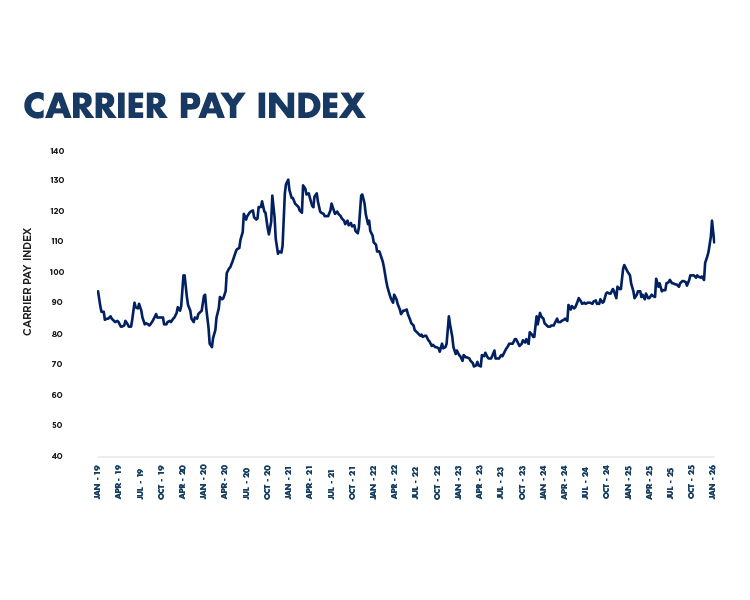
TQL Market Report shows early-year activity driven by weather and retail timing, not structural demandKey points:
- January activity is elevated due to weather, holiday returns and calendar timing – not underlying demand
- Industry-wide, rate movements reflect seasonal timing and execution rather than structural market tightening
- Truckload capacity remains flexible, allowing temporary pressure to resolve on its own
Weather disruptions, post-holiday retail returns and compressed shipping calendars all happen at once, creating short-term pressure across lanes and regions.
That can feel like a market shift, but early-year movement is usually driven by timing and execution, not by growing demand.
As 2026 unfolds, it’s helpful to separate seasonal noise from true demand signals. So far, most activity looks like the usual winter pattern – not the start of a sustained tightening cycle.
.jpg "JanMktRpt-Main1-(1).jpg")
Seasonality changes timing, not demand
Seasonality does not create new freight. It changes how and when freight moves.
Fewer shipping days and slower transit times push more volume into shorter windows.
That compression can lift rates even when overall demand remains flat. Retail-heavy regions and major metro hubs tend to feel the impact first, especially during weather events or peak execution weeks.
As conditions improve and shipping calendars normalize, those pressures typically unwind. Regional or lane-specific tightness fades without turning into a broader national shift.
Retail, imports reinforce neutral market
Retail freight hasn’t slowed, but it isn’t growing either. Activity is driven by store restocking, direct-to-consumer shipments and returns – not by replenishing depleted inventory.
Retailers remain focused on managing current stock levels rather than rebuilding them, which limits inbound freight demand and reduces the likelihood of sustained tightening.
Import activity tells a similar story. Volumes have improved modestly but remain in normalization mode rather than expansion. Gains have been incremental and reflective of stabilization, not growth.
Without sustained inbound momentum, inland truckload markets are likely to remain balanced.
The signal that matters most
Manufacturing remains the clearest indicator of a true market cycle change. When factories expand production, freight demand becomes repeatable, high-frequency, and persistent. That kind of volume moves through multiple stages of the supply chain and can turn localized tightness into a national trend.
Those signals are not present yet. New orders, production levels, and backlog indicators have not shown consecutive months of growth. Without that consistency, freight demand lacks the duration needed to structurally tighten capacity.
Until manufacturing turns, seasonal volatility is more likely than sustained tightening.
Why capacity self-corrects
Truckload capacity is flexible. When demand softens, carriers can reduce utilization, and when conditions improve, they can quickly add capacity back.
Seasonal rate bumps often pull equipment back into service and help balance out regional imbalances.
Because of that flexibility, capacity alone can’t keep the market tight unless demand stays strong. When rates settle back down, it usually means the pressure was seasonal and not a structural shift.
What’s next?
Current conditions are likely to continue through early Q2. Seasonal events, such as weather disruptions and retail execution windows, will keep volatility in the market. That pressure may show up differently across regions and equipment types, but the broader market remains stable.
A meaningful shift would require several changes at once:
• Manufacturing orders would need to grow for multiple months.
• Imports would need to rise without pull-forward behavior.
• Inventories would need to rebuild while warehouse utilization increases.
For now, the market is balanced, and rates are moving with timing and execution, not because demand is growing.
Count on TQL for logistics expertise and freight solutions. Contact your dedicated Logistics Account Executive today or call (800) 580-3101.


