
TQL November Market Report: Trucking capacity keeps rates elevated
Fewer available trucks, higher freight rates and rising diesel costs shape the outlook heading into winter
Key points:
- Fewer trucks are being posted for loads, and nearly all active trucking capacity is expected to be in use through the first quarter of 2027.
- Freight rates remain higher than last year, but conditions vary across dry van, reefer and flatbed.
- Rising diesel costs, winter weather and seasonal disruptions could make shipping more challenging in the months ahead.
The freight market continues to shift, and shippers are feeling the effects.
Carriers are posting fewer trucks for loads across dry van, reefer and flatbed, while freight rates remain well above last year's levels. Diesel prices are also climbing, adding to transportation costs.
Although freight demand is mixed, tight capacity leaves less room for unexpected changes. Here's what shippers should know about the latest market trends and what to watch as winter approaches.
Why are fewer trucks available?
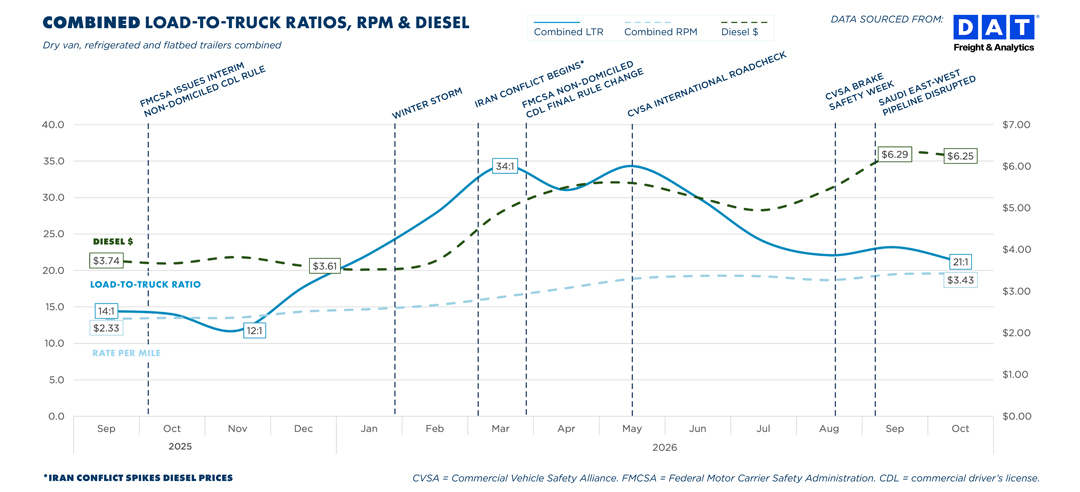
Carriers are posting 27.6% fewer trucks for loads across dry van, reefer and flatbed compared with last year.
FTR Transportation Intelligence expects nearly all active trucking capacity to remain in use through the first quarter of 2027. FTR considers utilization above 95% highly constrained, leaving little extra capacity when demand increases.
The combined load-to-truck ratio is up 51.4% from last year, meaning loads have more competition for available trucks.
How are dry van rates trending?
Dry van rates dipped slightly in late October but remain well above last year's levels.
For the week ending Oct. 24, rates averaged $2.24 per mile, excluding fuel. That's 33% higher than the same time last year.
FTR expects dry van rates to rise 12% in 2027, with freight volumes growing 3%.
Where is reefer demand changing?
Reefer demand looks different depending on the region. For the week ending Oct. 24, reefer rates averaged $2.73 per mile, excluding fuel, up 31% year over year.
Produce shipments are influencing regional demand. Shipments from Mexico into Texas increased 16% for the week, while California produce volumes declined 8%. Apple and pear shipments are also increasing demand for refrigerated trailers leaving the Pacific Northwest.
Looking ahead, FTR expects reefer rates to increase 11% in 2027 as freight volumes grow 1.6%.
Why is flatbed still so tight?
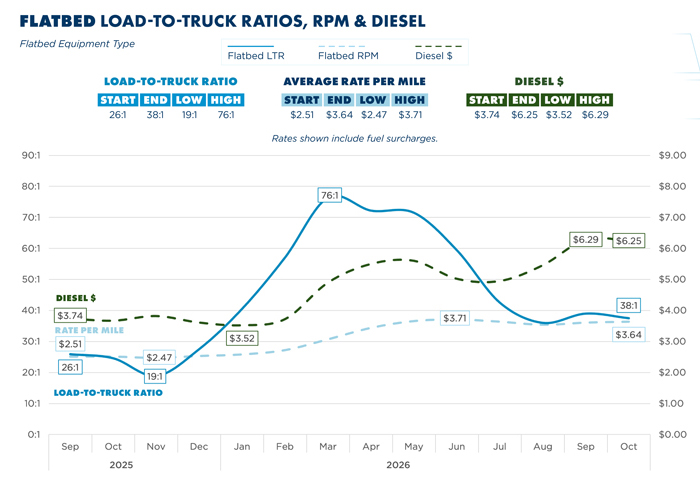
Flatbed has the highest load-to-truck ratio of the three major trailer types, meaning competition for available trucks remains strong.
Rates averaged $2.63 per mile, excluding fuel, for the week ending Oct. 24. That's 28% higher than last year.
Manufacturing activity is also picking up. Machinery orders increased 1% in September, while rail shipments of metals rose 9% year over year.
FTR expects flatbed rates to increase 11% in 2027, with freight volumes growing 2.4%.
What should shippers know about rising diesel prices?
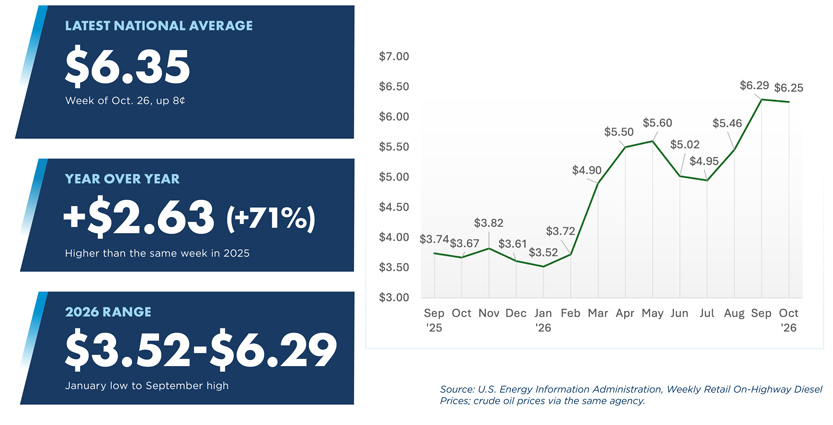
Diesel costs are adding another challenge. The national average reached $6.35 per gallon for the week of Oct. 26, up 8 cents from the previous week and 71% from the same week last year.
U.S. diesel inventories have fallen to their lowest level since November 2014. Higher crude oil prices and winter heating demand could keep fuel costs elevated.
What could disrupt freight in November?
Several seasonal events and market conditions could affect truck availability and shipping schedules:
- Pacific Northwest produce: Apple and pear shipments are increasing demand for refrigerated trucks.
- Southern California ports: Labor negotiations at the Los Angeles and Long Beach ports could disrupt operations. Existing rail delays may also affect inland shipments.
- Thanksgiving (Nov. 26): Holiday closures and adjusted shipping schedules could tighten pickup and delivery windows.
- Winter heating demand: Low diesel inventories and increased heating demand could keep fuel costs unpredictable.
What should shippers do next?
With fewer trucks available and rates expected to rise in 2027, planning ahead matters. Monitor market conditions, communicate freight needs early and stay flexible when scheduling shipments.
Stay ahead of changing freight rates and capacity with TQL. Contact your dedicated Logistics Account Executive or call 800.580.3101.


